


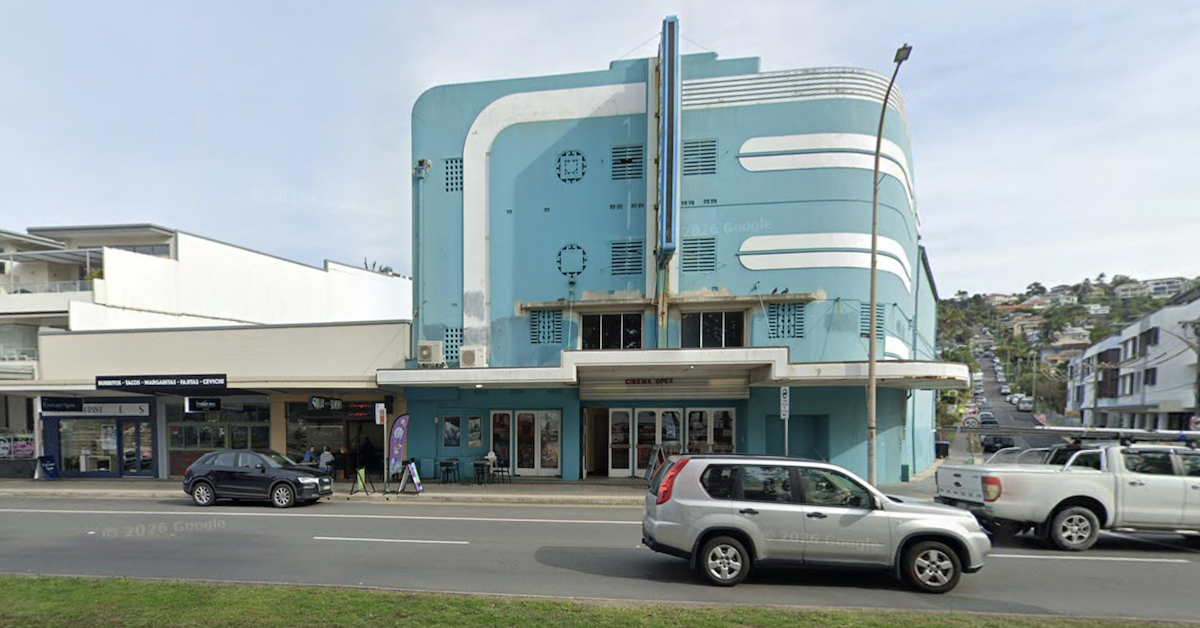
For generations of Collaroy residents, the cinema on the corner of Pittwater Road and Alexander Street has been one of the suburb’s enduring landmarks. Its Art Deco façade has remained part of the Northern Beaches streetscape while audiences passed through its doors for school-holiday films, weekend sessions and nights at the pictures.
Collaroy Cinema closed after its final session on Saturday, 22 August, pausing an 88-year history that began in 1938. Its last scheduled screening was Spider-Man: Brand New Day at 7:00 p.m.
Yet, a permanent closure has not been announced. Mustaca Group chief executive Sam Mustaca has said the family is repositioning its property portfolio and that Roy Mustaca intends to reopen the theatre, although no timetable has been disclosed.
For a cinema that has repeatedly adapted to changes in technology, ownership and audience habits, the latest shutdown adds another uncertain chapter rather than a confirmed ending.
A picture palace built beside the beach
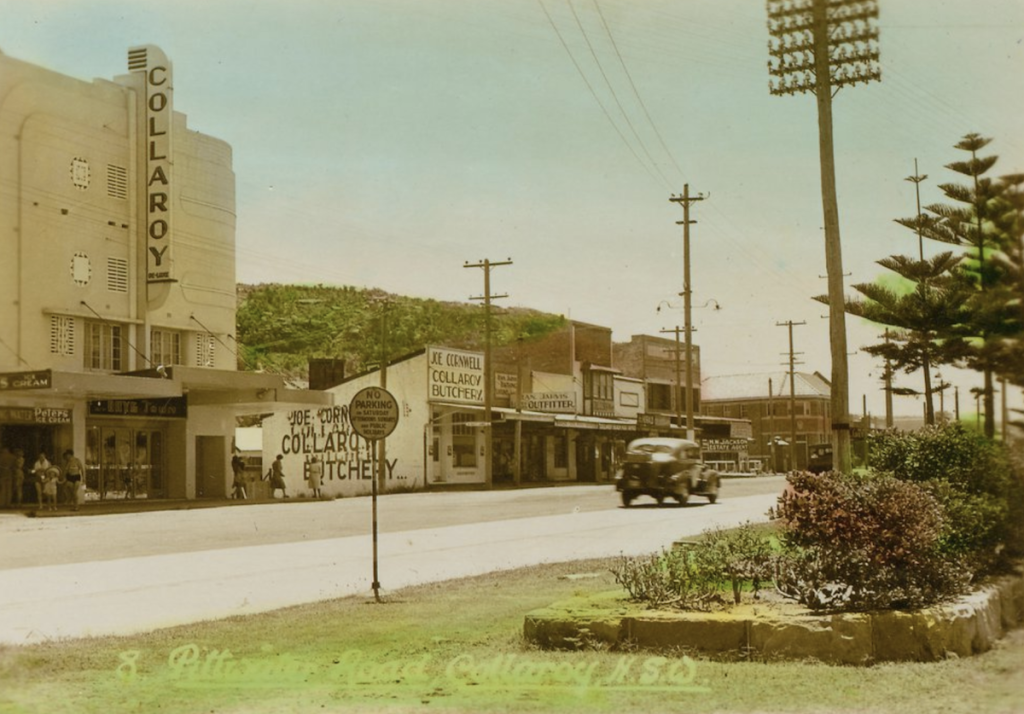
Designed by architect J.C. Rennie for Casmi Theatres Pty Ltd, the venue opened in early 1938 as the De Luxe Theatre. Before its construction, movies in Collaroy were shown at the nearby Arlington Amusement Hall; the De Luxe gave the suburb its first dedicated, beachfront picture palace.
Architect J.C. Rennie designed the theatre with the streamlined Art Deco detailing that still defines the building, including its curved corner and prominent cinema signage. The venue was conceived with many of the features then expected of a modern theatre, including mechanical ventilation, comfortable seating, lounge areas and improved acoustics.
Construction presented difficulties because part of the site sat below sea level, requiring water to be pumped continuously while the foundations were laid.
War, television and changing names
The theatre’s early years were soon tested.
Australia entered the Second World War in 1939, only a year after the cinema opened. During the 1950s, the arrival of television in Australian homes began drawing audiences away from suburban theatres.
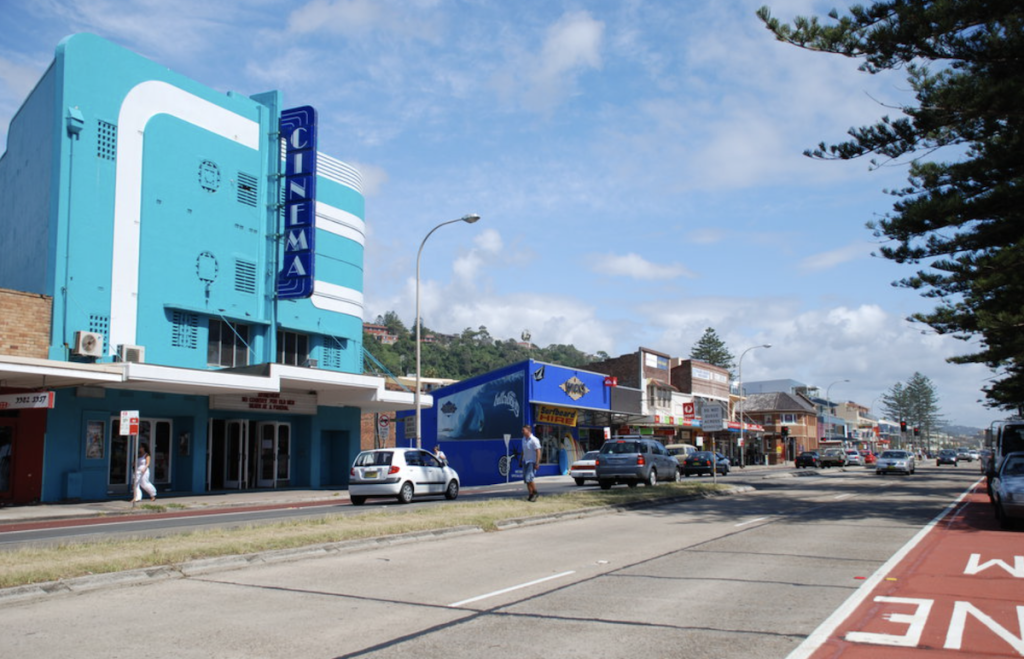
Many cinemas closed, but Collaroy continued operating. Its name and ownership changed several times. The theatre became the Odeon, later the Classic Cinema, and eventually operated under United Cinemas.
Entertainer Mike Walsh purchased the theatre in 1987 as part of his cinema interests. The Mustaca family acquired it in the late 1980s.
Roy has previously said he bought the property after learning that a builder intended to demolish it. He has also said the cinema was in poor condition when he acquired it and required major work, including a replacement roof, air-conditioning, carpeting and reupholstered seating. The auditorium was later converted into two screens.
A rare survivor with a social history
Northern Beaches Council lists the cinema’s façades and interiors as a rare surviving example of an inter-war Art Deco cinema. Beyond its formal heritage listing, patron memories, such as children receiving free lollipops and packed houses during school holidays, highlight its central role in the suburb’s social fabric.
Its heritage significance also extends beyond the architecture. Council records recognise the theatre’s role in the early recreational and social life of Collaroy’s commercial centre.
Patron memories preserved in historical cinema records offer a more personal glimpse of that role. One former patron recalled children receiving free lollipops after films and packed houses during school holidays.
Another reinvention before the shutdown
Only months before the planned closure, the cinema was attempting another transformation. In late 2025, plans were announced to broaden the venue’s use beyond film screenings by introducing live music, theatre, school performances and local bands. The program aimed to give the historic venue a wider role in the community while retaining cinema screenings.
The move followed a pattern that had marked much of the theatre’s life. As audience habits changed, the building was repeatedly altered or repurposed in an effort to remain viable. The latest reinvention lasted less than a year before the decision to close the cinema was announced.
On 22 May, receivers were appointed in relation to 10 NSW investment properties owned by the company after action by lender Metrics Credit Partners.
Collaroy Cinema was not reported among the properties originally identified in that receivership, and the reason for the decision to close the cinema has not been publicly disclosed.
While Collaroy Cinema was not reported among the properties directly tied to that receivership, the precise reasons behind the pause remain undisclosed, beyond Sam Mustaca’s assertion that the venue will eventually reopen.
The next act remains unwritten
Having survived World War II, the rise of television, ownership shifts, and the pandemic, the cinema on the corner of Pittwater and Alexander has always been defined by adaptation. For now, with no scheduled screenings on the board, Collaroy waits to see if its oldest landmark will pull back the curtain once more.
Published 26-Aug-2026