


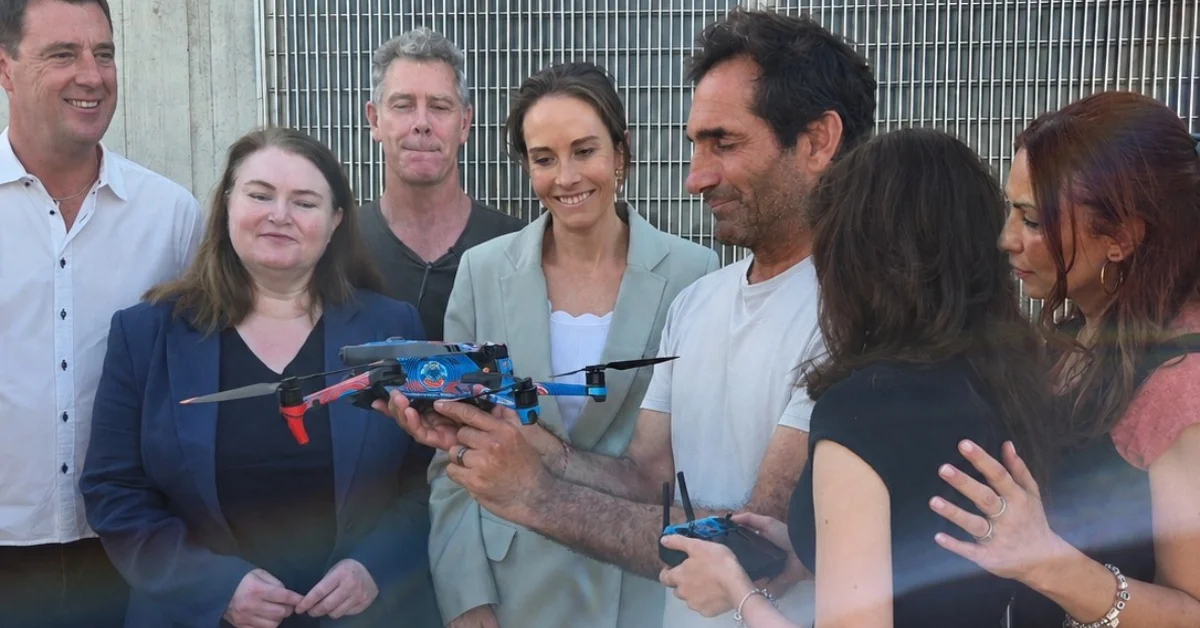
Mercury Psillakis’ name will now be carried above the water he loved, with shark-surveillance drones being rolled out across NSW boardrider clubs in a program shaped by his family’s support after his death in a shark attack.
Mercury Psillakis’ Legacy Takes To The Skies
On the Northern Beaches, where surfing is part of daily life for many families and clubs, the new drone program has turned grief into a practical safety measure.
Mercury Psillakis, a respected Northern Beaches surfer, died after being attacked by a white shark at Dee Why Beach on 6 September 2025. He was 57. His death left a deep mark on the local surfing community, and his family has since supported stronger use of drone surveillance to help protect surfers during club activity.
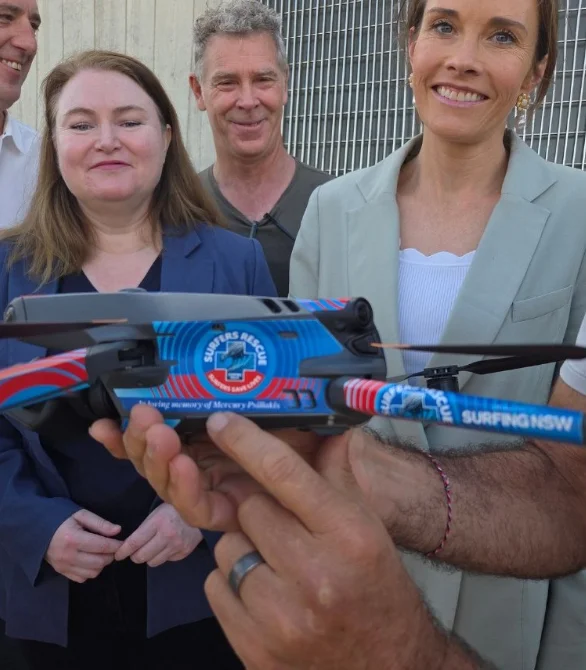
Each drone deployed through the expanded program will carry Mercury’s name. For his widow, Maria Psillakis, and twin brother, Michael Psillakis, the rollout is both a tribute and a step towards improving safety for others who enter the water.
The program does not erase the loss, but it gives Mercury’s memory a visible place in the future of beach safety. His name will be attached to equipment intended to watch over surfers during competitions, training sessions and other organised boardrider club activities.
Northern Beaches Training Begins Before Wider Rollout
Training has begun on the Northern Beaches before moving to Sydney’s southern beaches and then to regional training locations north and south.
The rollout will provide 60 drones to boardrider clubs that had not yet been equipped. By the end of winter, 125 volunteer drone pilots are expected to be trained.
Surfing NSW is delivering the program across its boardrider club network, which includes 120 clubs along the NSW coast and more than 11,500 active members. Half of those members are under 18, giving the program clear importance for clubs with growing junior participation.
Boardrider clubs operate beyond the regular patrol season, with competitions, training sessions and inter-club events continuing throughout the year. The drone program is intended to fill part of that gap by giving clubs their own trained volunteers and equipment during organised surfing activity.
How The Shark Surveillance System Will Work
The drones will be used to monitor the water in real time during boardrider club events and training. Volunteer pilots will be trained to identify high-risk shark species and follow set procedures when a shark is seen.
If a shark is spotted during a club event or training session, activity will be paused for at least 30 minutes unless local beach safety directions require another response. Shark sightings and warnings will also be uploaded to the SharkSmart app, giving water users access to near real-time information before entering the water.
The system is not a promise of constant surveillance across every beach. Its focus is more specific: adding another layer of monitoring during organised surfing activity, especially when regular patrols may not be operating.
That distinction matters. The program is designed around the rhythms of boardrider clubs, where surfers train early, compete on weekends and continue entering the water through seasons when formal patrol coverage may be limited.
A Wider NSW Surf Safety Effort
After the Northern Beaches rollout, the program will extend across Sydney’s southern beaches before further regional training is delivered. The broader rollout includes coastal areas such as Newcastle and Wollongong.
The program also points to future changes in shark surveillance. Automated drones and artificial intelligence-assisted shark detection are being considered, although the current rollout relies on trained pilots operating the drones.
For the Psillakis family, the drones carry more than equipment. They carry Mercury’s name into the daily work of keeping surfers safer. For boardrider clubs, the rollout provides training, equipment and a clearer process when sharks are sighted during organised activity.
What began on the Northern Beaches now has a wider NSW reach, linking one surfer’s memory with a community-led effort to give others in the water another layer of protection.
Published 5-May-2026